

Where We’re Growing
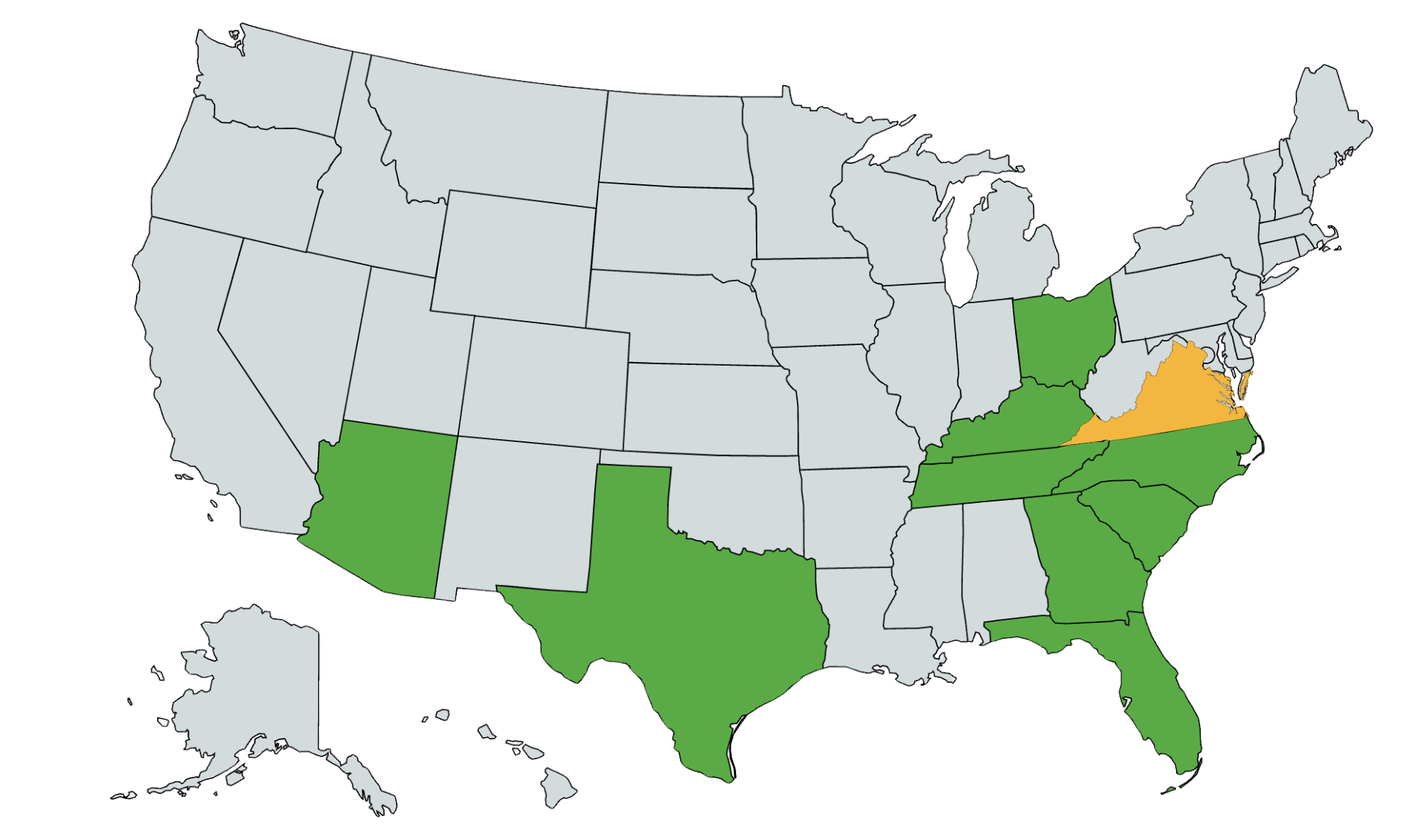
Why These Communities
We're not partnering with founding farmers randomly. Rather we have carefully identified communities where the gap between industrial agriculture's promises and actual food availability is widest.
Atlanta, Phoenix, Nashville, Charlotte, South Florida, Tampa Bay, Austin, Dallas, Orlando, Houston, Raleigh-Durham, Cleveland, and Cincinnati each have exploding urban populations, abundant vacant commercial real estate, and communities watching their farmland vanish while their grocery bills climb.
These aren't "growth markets" - they're sovereignty vacuums waiting for Economic Insurgents who understand that moving the farm beats moving the food every single time.
The Area 2 Farms model works because the infrastructure already exists: empty gas stations on valuable corners, underutilized lots in dense neighborhoods, zoning frameworks that reward adaptive reuse, and populations hungry for an alternative to the 1,500-mile supply chain.
You're not pioneering unproven territory. You are replicating a system that's completed over 20,000 harvests in Virginia, now available in states where the demand is obvious and the barriers are lower.
Read more why Atlanta, Phoenix, Nashville, Charlotte, South Florida, Tampa Bay, Austin, Dallas, Orlando, Houston, Raleigh-Durham, Cleveland, and Cincinnati are not just ready - they are overdue.
Frequently Asked Questions
-
You own and operate a neighborhood farm as critical infrastructure. You're not just "buying a franchise".
You own the farm. You own the customer relationships. Area 2 Farms provides the competitive advantages: organic certification systems, operational technology, brand, and a network of expert peer farmers solving the same problems you are.
-
No, but you need operational fluency. The best Farmers come from backgrounds where execution was the job.
If you've managed a P&L or led a team, we can train the ag-specific knowledge. If you haven't, this will be harder than you think.
-
The economics work because the farm is the distribution. You're not competing on price; you're competing on proximity and quality.
Direct-to-consumer only. No wholesale. No middlemen.Land-as-infrastructure. Farms move to consumers, not the other way around. This solves the "last mile" problem that kills most food businesses.
-
Total Investment Range: $308,817 - $471,000
This covers your franchise agreement, site development, equipment, organic certification, and working capital for the first 3 months.
The exact investment depends on site characteristics and local market conditions. We provide a detailed breakdown during your discovery call after we've evaluated your specific geography and goals.
-
Yes. We insist on it. You need to see the infrastructure, taste the product, and meet the team. This is an essential part of our selection process.