

The System Behind Area 2 Farms
It’s the simplest idea. Stop driving lettuce 2,000 miles. Put the farm where the people are.
But simple ideas have hard requirements. If a farm is going to live in a neighborhood, it has to fit, run reliably, and be operable by farmers, not a team of engineers in lab coats. That’s why Silo exists.
Silo is our growing system that makes “Move the Farm, Not the Food” possible. It’s built for soil, it runs autonomously, it fits the spaces communities already have, and it’s designed so the economics work for a local business. The Silo system is how the farm comes home.
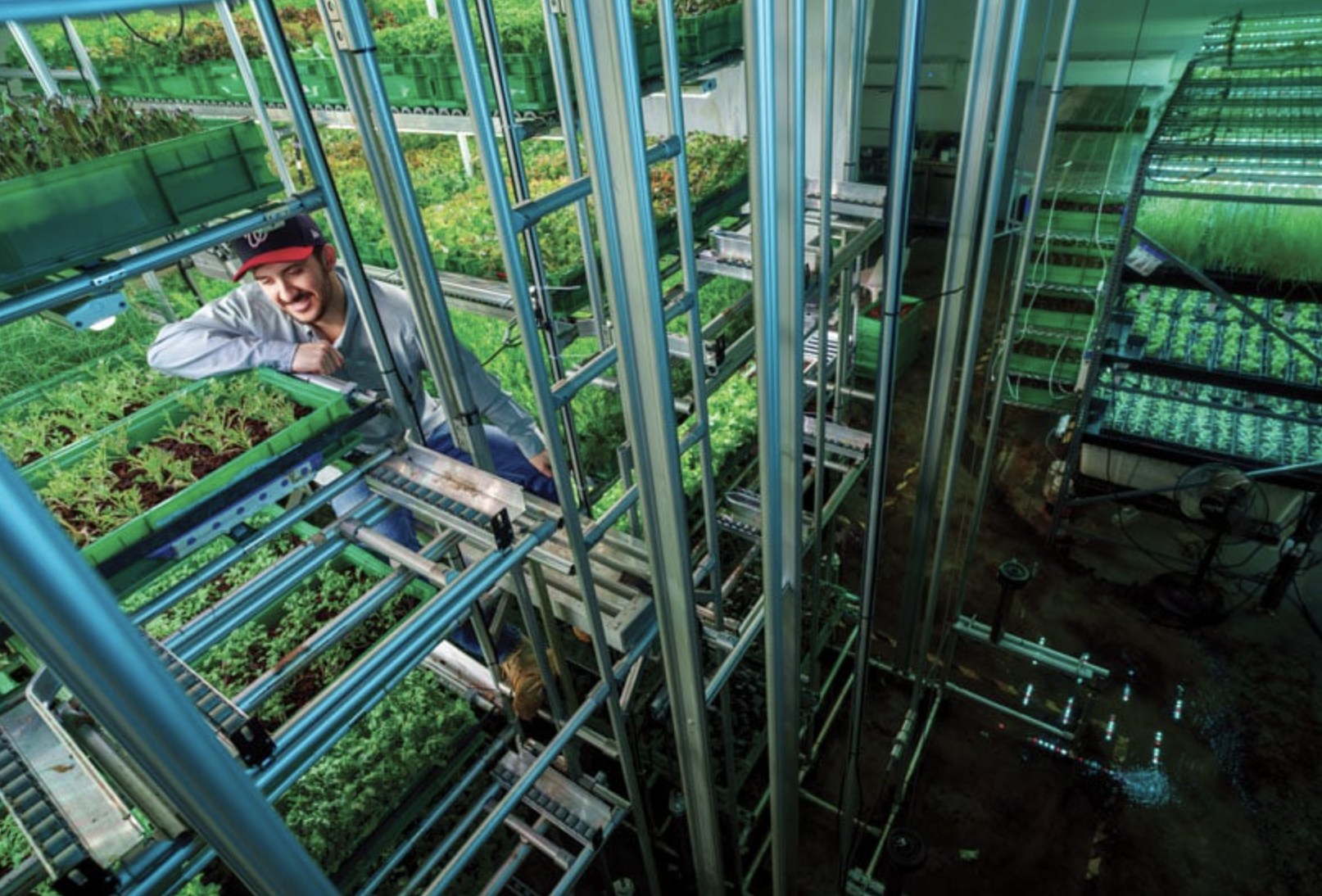
Move the Plants, Not the Air
Traditional indoor farms try to force every inch of space into identical conditions. Same temperature. Same humidity. Same light. Floor to ceiling. It sounds efficient, but it isn’t.
As heat rises, moisture settles, and small inconsistencies compound into constant corrections, and those corrections require energy, equipment, attention that never stops, and lots of money.
Silo doesn’t fight physics. It works with it
Plants move through the growing environment instead of sitting fixed in one imperfect zone. Over time, each plant experiences a natural range of conditions, warmer, cooler, drier, more humid, and the result is consistency through averaging, not through force.
Moving air is hard. Moving plants is easy, and that single shift changes everything about how an Area 2 Farms location operates. That means three things for the farmer:
Resilience. With soil as a buffer, if something disrupts the system, the farm is less likely to face catastrophic failure and economic loss. Resilience ensures that farmers have time to respond naturally in hours or days, not minutes.
Simplicity. No nutrient mixing. No pH balancing. No water chemistry management. The complexity that dominates most hydroponic farming operations simply isn’t part of the daily routine.
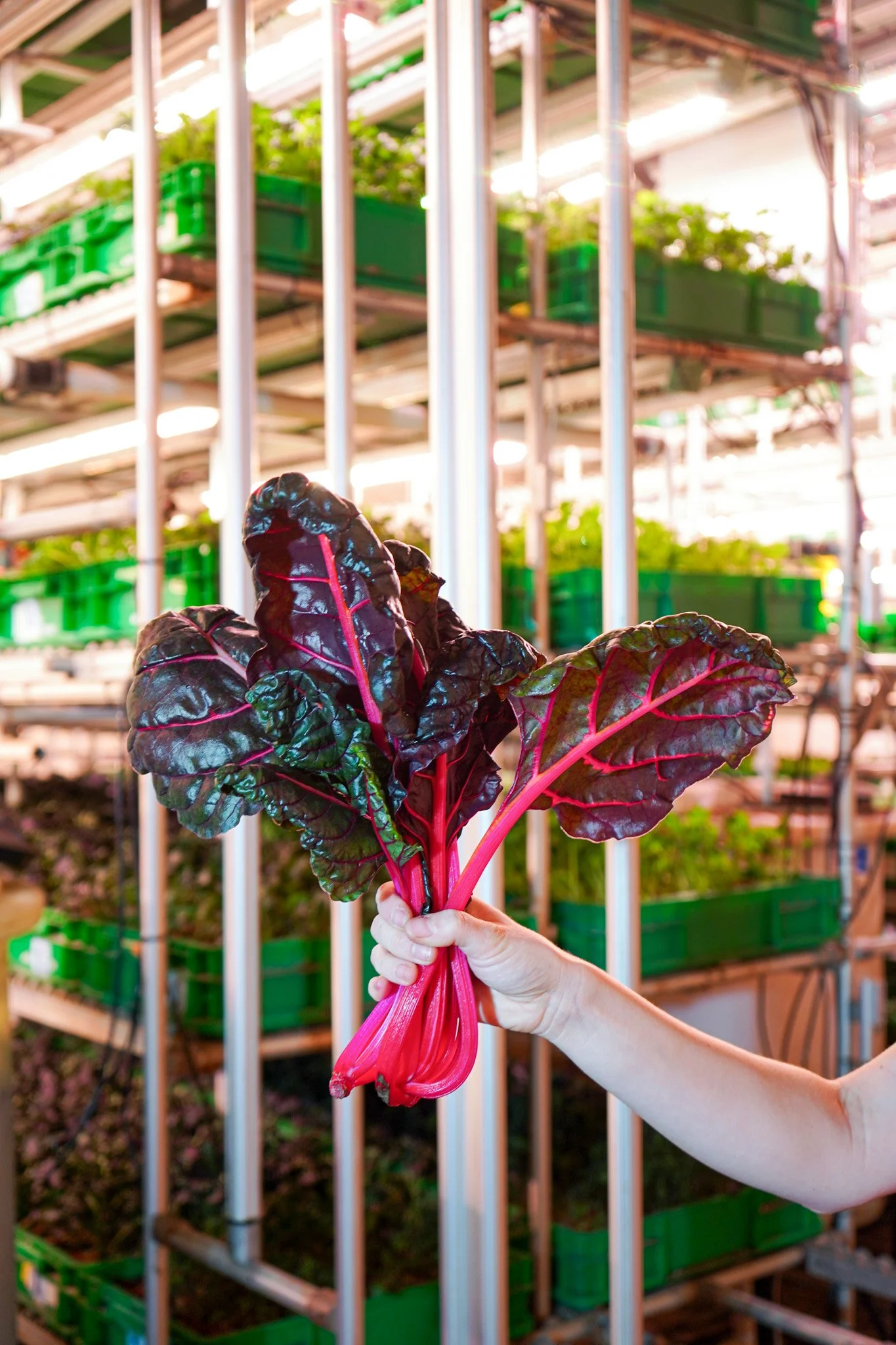
Organic certification. Area 2 Farms locations are USDA Certified Organic. That distinction matters to community members, and it’s a competitive advantage that most farming systems structurally cannot offer.
Soil isn’t a limitation. It’s a design choice, and it’s the reason this system is simpler to operate, more resilient when things go wrong, and produces everything your community members expect from a farm.
When we say the system runs itself, we mean it literally. The Silo rotates on its own, irrigation is triggered automatically, and the system doesn’t need someone watching it around the clock, adjusting settings, or troubleshooting in the middle of the night.
So while many modern farms are being built like labs. Silo was designed to run itself so you can be an active part of the local community. During your day to day you walk the farm, confirm everything looks right and focus on the key tasks that have the greatest impact on building a thriving community supported farm business. And that time goes where it actually builds the business: talking to customers, running the farm stand, being present in the community.
Because a farm doesn’t succeed because the irrigation system is perfect. It succeeds because the farmer is available, attentive, and active.
A System Built to Fit Your Neighborhood
The goal is to move the farm to the neighborhood, not the food across the country, and so the system has to work in the spaces neighborhoods already have. Silos are modular, they configure to the footprint, not the other way around. The building doesn’t need to be custom-designed for the farm. The farm adapts to the building. That flexibility isn’t a feature. It’s the entire premise.
This is what makes the Area 2 Farms model work. Not finding perfect facilities in perfect locations, but bringing farms into the communities that need them, in the spaces that already exist.
Silo was designed to deliver equivalent or better growing capacity at a fraction of the cost to build and operate. Lower build costs because the system uses accessible, modular components, and lower operating costs because autonomous operation means less labor, less energy spent conditioning the environment, and less waste from system failures. And because the system is built for durability and repairability, maintenance costs stay predictable over time. If something needs attention, the fix is straightforward. The system is designed so the economics work for a farmer running a local business.
What a Day Actually Looks Like as an Area 2 Farmer
You arrive at your Area 2 Farms location. The system has been running overnight, rotating, watering, lighting, all on its own. You walk the farm. Check that plants look healthy. Confirm the system is operating normally. That check takes minutes, not hours.
Then you prepare and execute for the harvest, and your CSA members. You talk to the neighbors who stop by. You build the relationships that turn first-time buyers into regulars. You’re not managing a controlled environment. You’re running a farm and a business, in your community, on your terms.
That’s the difference between a system built for engineers and a system built for farmers.
See the Silo System in Action
Watch the Silo system in action, plants rotating through a full growing cycle, autonomous irrigation, and the daily rhythm of a working Area 2 Farms location. This is what "Move the Farm, Not the Food" looks like in practice.
Frequently Asked Questions
-
You own and operate a neighborhood farm as critical infrastructure. You're not just "buying a franchise".
You own the farm. You own the customer relationships. Area 2 Farms provides the competitive advantages: organic certification systems, operational technology, brand, and a network of expert peer farmers solving the same problems you are.
-
No, but you need operational fluency. The best Farmers come from backgrounds where execution was the job.
If you've managed a P&L or led a team, we can train the ag-specific knowledge. If you haven't, this will be harder than you think.
-
The economics work because the farm is the distribution. You're not competing on price; you're competing on proximity and quality.
Direct-to-consumer only. No wholesale. No middlemen.Land-as-infrastructure. Farms move to consumers, not the other way around. This solves the "last mile" problem that kills most food businesses.
-
Total Investment Range: $308,817 - $471,000
This covers your franchise agreement, site development, equipment, organic certification, and working capital for the first 3 months.
The exact investment depends on site characteristics and local market conditions. We provide a detailed breakdown during your discovery call after we've evaluated your specific geography and goals.
-
Yes. We insist on it. You need to see the infrastructure, taste the product, and meet the team. This is an essential part of our selection process.