

Stop Looking For Land
The next farm isn't waiting somewhere out in the country. It's hiding in plain sight, a few miles from where your neighbors already live.
Most prospective local farm owners think of farmland as acreage, open fields, and a long drive from the city. It's a beautiful image, and it points you in exactly the wrong direction. Local farms exist to serve people, and people live in cities and their surrounding suburbs.
If you're reading this, you’re probably already asking where your community needs a farm. If that's true (and it is), then the question isn't "where can I find cheap land?" The real question is "where can a farm actually succeed?"
The answer is probably not where your instincts point. It's not the busy retail corridor, the newly developed mixed-use block, or anywhere a broker would call a high-visibility location. Those spaces come with rents that make the math impossible before you've grown a single radish. What you're looking for is the overlooked, the half-empty, the building that's been sitting vacant for a year while the neighborhood around it quietly gets more interesting.
It’s not settling for less. It’s the model. We’re here to show you how to look at your own city and start asking the question: could a farm work here?
Think Like An Operator, Not A Broker
Buyers wait. They scan listings, and trust brokers to surface the right opportunity at the right moment. Operators notice things before they're obvious. They see a shuttered retail strip and wonder what's in the back. They know the best farm locations aren't listed anywhere, but are found through observation, local knowledge, and the willingness to have a direct conversation.
This distinction matters because it's also a test. The people who thrive as Founding Farmers are the ones who already think this way, or who recognize this mindset and want to build it. Site scouting isn't a task you outsource. It's the first act of ownership.
The 10 Mile Rule
Move the farm, NOT the food, is not a slogan, it’s a site selection principle. 10 miles. That’s your non-negotiable constraint in shaping your farm's customers, and your community story. It's not an arbitrary number. It's the difference between a farm that's woven into a community and one that's just shipping boxes into it.
What You’re Actually Looking For
The spaces that work best are usually straightforward. They are not rare or premium real estate, but instead:
3,500–5,000 sq ft of usable interior space. This space is enough room to operate efficiently without carrying overhead you don't need. Bigger isn't better, it's just a cost you'll feel every month.
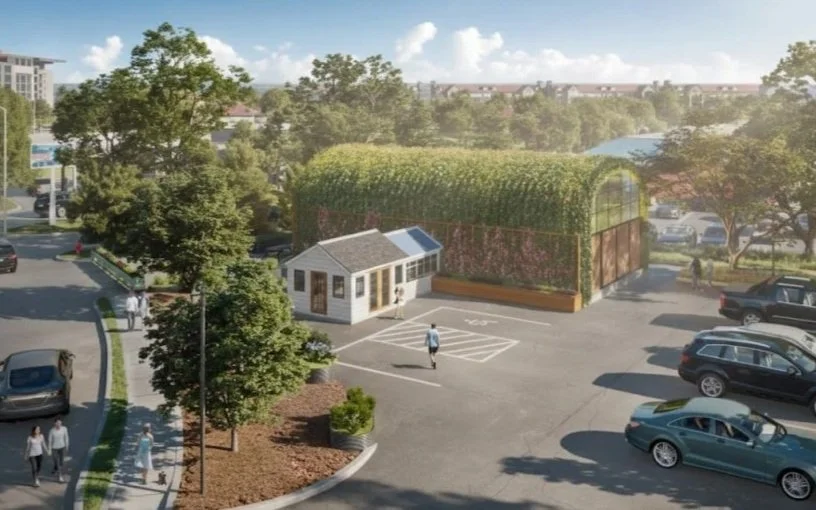
A "vanilla box" that can be adapted without major structural work. Not turnkey, not a gut renovation, but rather a clean, flexible shell you can build the operation you need without a lengthy construction project or permitting process standing between you and opening day.
Close to people who’ll buy from you. Proximity to your customers is the whole model. The shorter the distance between the farm and the table, the stronger the relationship.
Easy customer access for parking, foot traffic, or both. People need to be able to get to you without thinking about it. If it’s hard to stop by, they won’t.
Utilities in place like water, power, basic ventilation. No utilities, no farm. A space that needs significant infrastructure upgrades adds cost and will eat your timeline and your budget before you’ve grown anything.
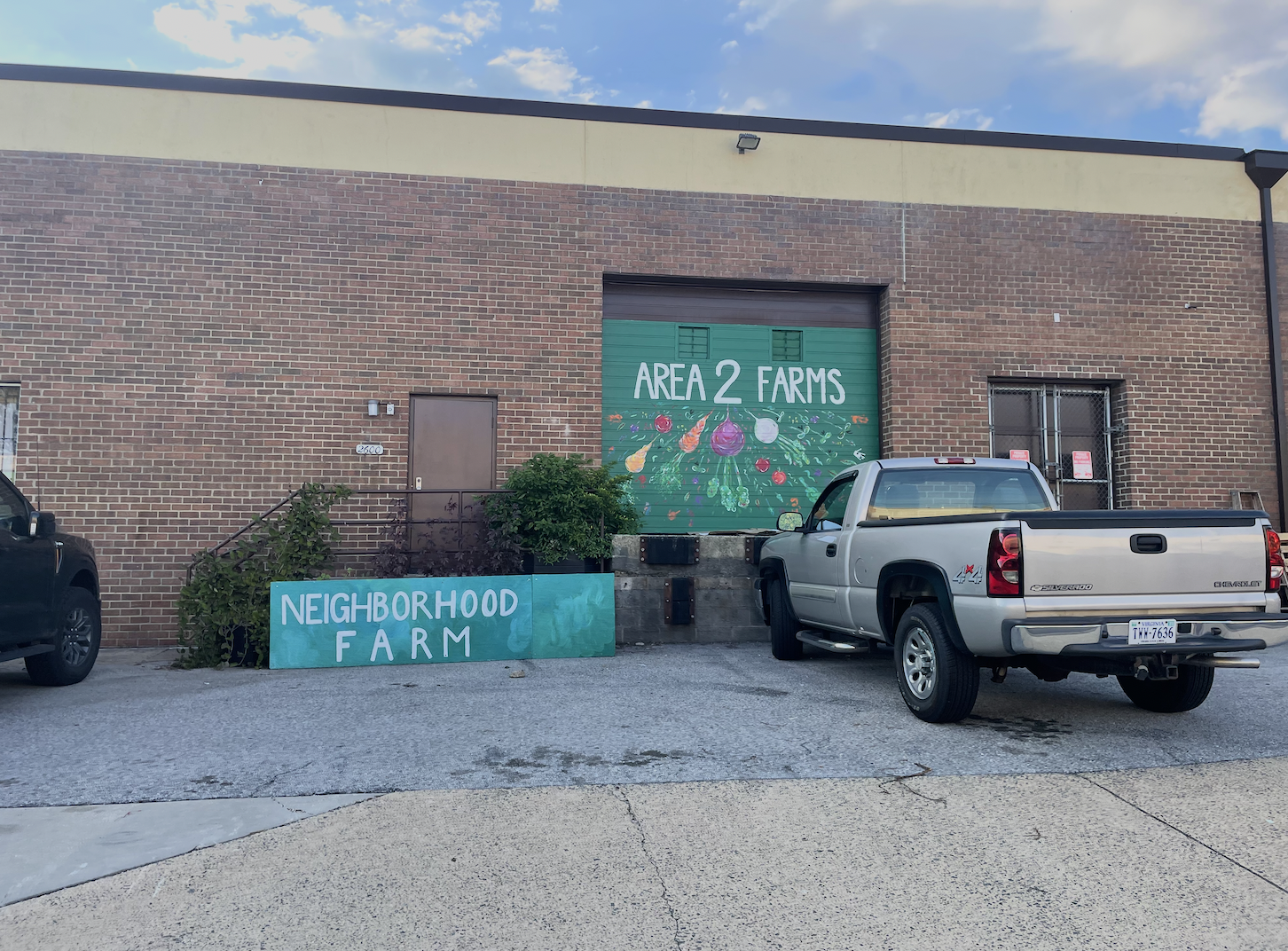
These spaces exist in every city in the country. Take Area 2 Farms – Fairfax location. The site sat vacant for 25 years. The lot's size and shape made it a poor fit for most businesses, which is exactly what made it right for us. Our small footprint and flexible design turned a drain on the property owner and an eyesore for the community into something the neighborhood actually values. The challenge isn't scarcity. It's learning to recognize what's already there.Ask yourself, where are the farmers markets? Which neighborhoods are full of people who care deeply about what they eat? Where are families paying premium prices for organic produce that traveled a thousand miles to reach them? That gap of high demand with no local supply is exactly what you're looking for. Find that tension. That's where you start.
Where To Look
Start with a simple exercise. Pick the densest part of your target neighborhood and drive a two-mile radius around it. Don't look for "for lease" signs. Instead, notice what's been sitting still. For instance, the former service business with weeds coming through the parking lot, or the building that looks like it's waiting for someone to pay attention to it. Those are your leads.
Vacancies are the obvious starting point, especially ones that have sat empty for more than a year. Former service businesses, like auto shops, dry cleaners, and light-industrial units, are often better. They tend to have higher ceilings, tougher floors, and owners who are genuinely tired of the space sitting idle.
The goal isn't to find something pretty. It's to find something workable. Those are very different things.
Unremarkable is an advantage. It means fewer options, and you have more leverage.
Who To Talk To
You've driven the neighborhood, flagged a few spaces, noticed places in your community you never looked twice at before. Now you're wondering, who do I actually talk to?
Skip the broker, at least at first. The best early conversations happen directly with property owners, with city economic development offices looking for ways to activate vacant corridors, and with local business associations who know every building on the block and who owns it.
Behind every space is someone who's ready for a different kind of conversation. Lead with the story, don't open with square footage requirements or lease terms. The same framing works with city officials and economic development groups. Vacant corridors are a problem they're actively trying to solve, and they often have tools to help, such as grants, incentive programs, and introductions to property owners that most people never think to ask about. Don't ask what's available. Tell them what you're building and ask who they know. Walk in with that framing and you're offering a solution, not asking for a favor.
You won't be walking in empty-handed. Area 2 Farms developed the Urban Farms Toolkit, a municipal guide to zoning reform, site typologies, and model ordinance language that helps cities understand exactly how indoor farms fit into their existing codes. It's the document that helped Fairfax, Virginia and Tempe, Arizona amend their zoning to permit urban agriculture by right. When you hand it to a planning director, you're not pitching, you're educating. That changes the entire dynamic.You don't have to figure out how to have these conversations alone. Area 2 Farms works alongside you through the entire site selection process. We'll help you identify the right spaces, prepare for landlord conversations, and navigate the steps between a promising lead and a signed lease. The goal is to make sure that you find the right space for your farm.
Are You Ready to Scout?
Before you go any further, answer these questions:
What are three neighborhoods within 10 miles of where you live where this would work? Be specific and write down the names of intersections, corridors, and zip codes.
Where do people in your community already gather around food?
What spaces have you noticed sitting empty?
Finding a site is not a task to delegate. It's the first proof that you understand your community well enough to serve it. Before you run a farm, you should be able to see where one fits. That awareness, that connection to place ,is what separates someone who wants to own a farm from someone ready to operate one.
Your farm is out there. It's not on a hillside somewhere. It's on a block you drive past every week.
Your First Assignment
You know how to look. You know who to talk to. Here's how to start:
Identify 3–5 potential locations in your city.
Write down why each one could work, proximity to demand, space characteristics, neighborhood dynamics.
Download the Urban Farms Toolkit, the same guide cities use to understand how Area 2 Farms fit into their zoning codes. Bring it to your first conversation.
Then apply. Bring your list. We'll take it from there. Apply to Be a Founding Farmer →
Want to see what this looks like in practice? Take a look behind the scenes at our farm in Washington, D.C. See the Farm →
Frequently Asked Questions
-
You own and operate a neighborhood farm as critical infrastructure. You're not just "buying a franchise".
You own the farm. You own the customer relationships. Area 2 Farms provides the competitive advantages: organic certification systems, operational technology, brand, and a network of expert peer farmers solving the same problems you are.
-
No, but you need operational fluency. The best Farmers come from backgrounds where execution was the job.
If you've managed a P&L or led a team, we can train the ag-specific knowledge. If you haven't, this will be harder than you think.
-
The economics work because the farm is the distribution. You're not competing on price; you're competing on proximity and quality.
Direct-to-consumer only. No wholesale. No middlemen. 100% of revenue stays between you and your customers.Land-as-infrastructure. Farms move to consumers, not the other way around. This solves the "last mile" problem that kills most food businesses.
-
Total Investment Range: $308,471 - $471,000
This covers your franchise agreement, site development, equipment, organic certification, and working capital for the first 3 months.
The exact investment depends on site characteristics and local market conditions. We provide a detailed breakdown during your discovery call after we've evaluated your specific geography and goals.
-
Yes. We insist on it. You need to see the infrastructure, taste the product, and meet the team. This is an essential part of our selection process.