

The LED Problem Isn't What You Think
Critics are right about the wrong thing, and missing the revolution already underway
Every few months, a new wave of obituaries arrives for plant factory farming. The physics just doesn't work, the critics say. They consume too much energy. The economics are broken. You can’t compete with the sun. The latest entry is a familiar argument with fresh urgency.
They're not wrong about physics. They're just critiquing a business model that already failed, and ignoring the one that's quietly working.
The plant factories that collapsed under the weight of their own ambition, i.e. AeroFarms, AppHarvest, Bowery, etc. shared a fatal premise, that they should compete with industrial agriculture. They built cavernous warehouses, raised hundreds of millions in venture capital, and tried to grow commodity greens cheap enough to stock the shelves of Whole Foods in Boca Raton, Florida and Austin, Texas simultaneously. They were, in essence, trying to out-sun the sun.
But they didn’t fail because of LEDs. They failed because vertical farming is interesting, but distributing to the grocery store is totally undifferentiated. They failed because of logistics.
Here is a number that people rarely talk about. According to the USDA, farmers receive only $0.16 cents of every dollar spent on food in America. The other 84 cents disappears into a multi-modal supply chain of trucks, cold storage, distributors, and middlemen, that move the average food item 1,500 miles before it reaches your plate. The cost of a lightbulb is trivial next to the cost of that journey.
Area 2 Farms was built around a different premise entirely: don't compete with the sun. Compete with the supply chain.

Move the Farm, NOT the Food
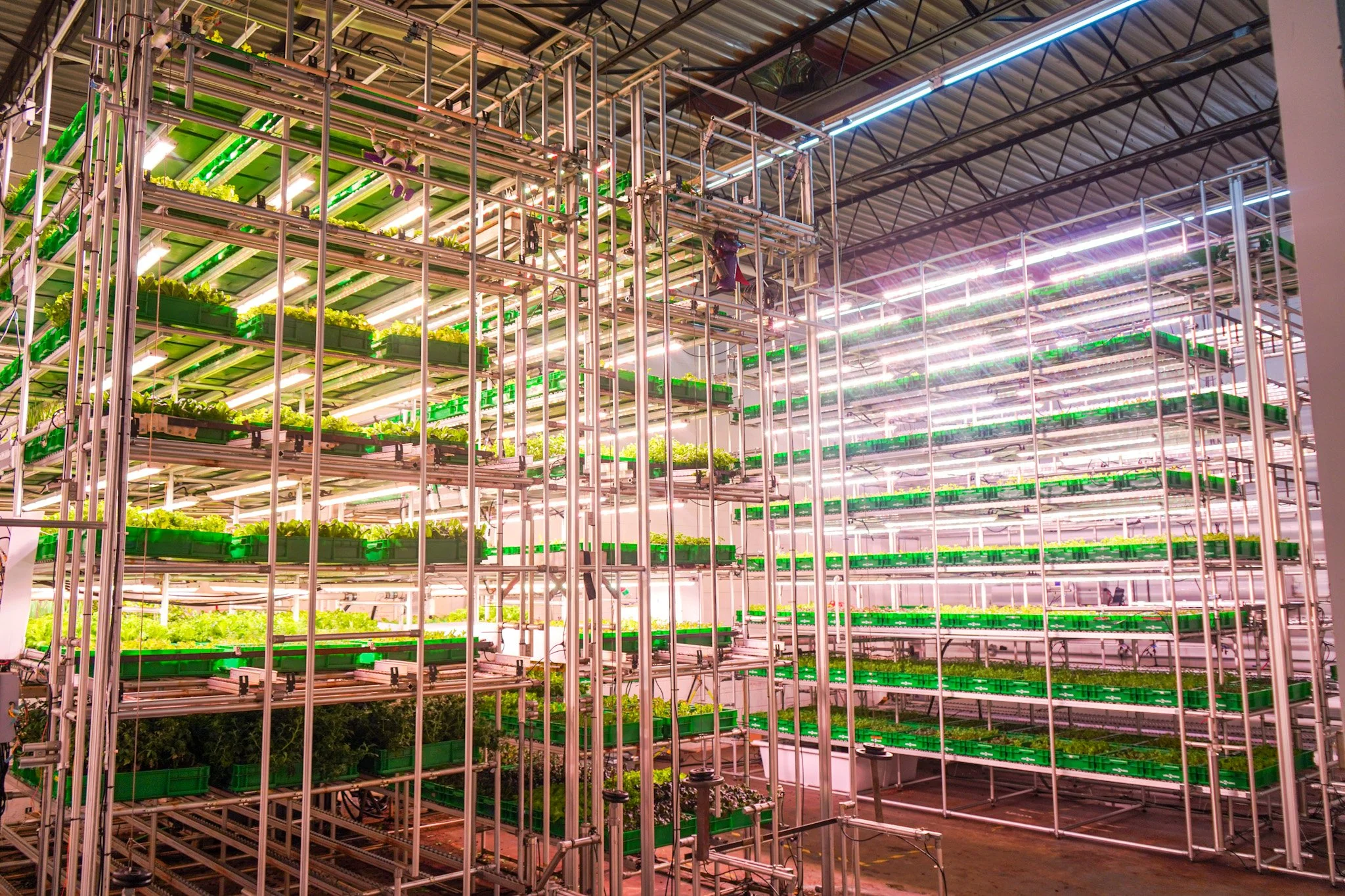
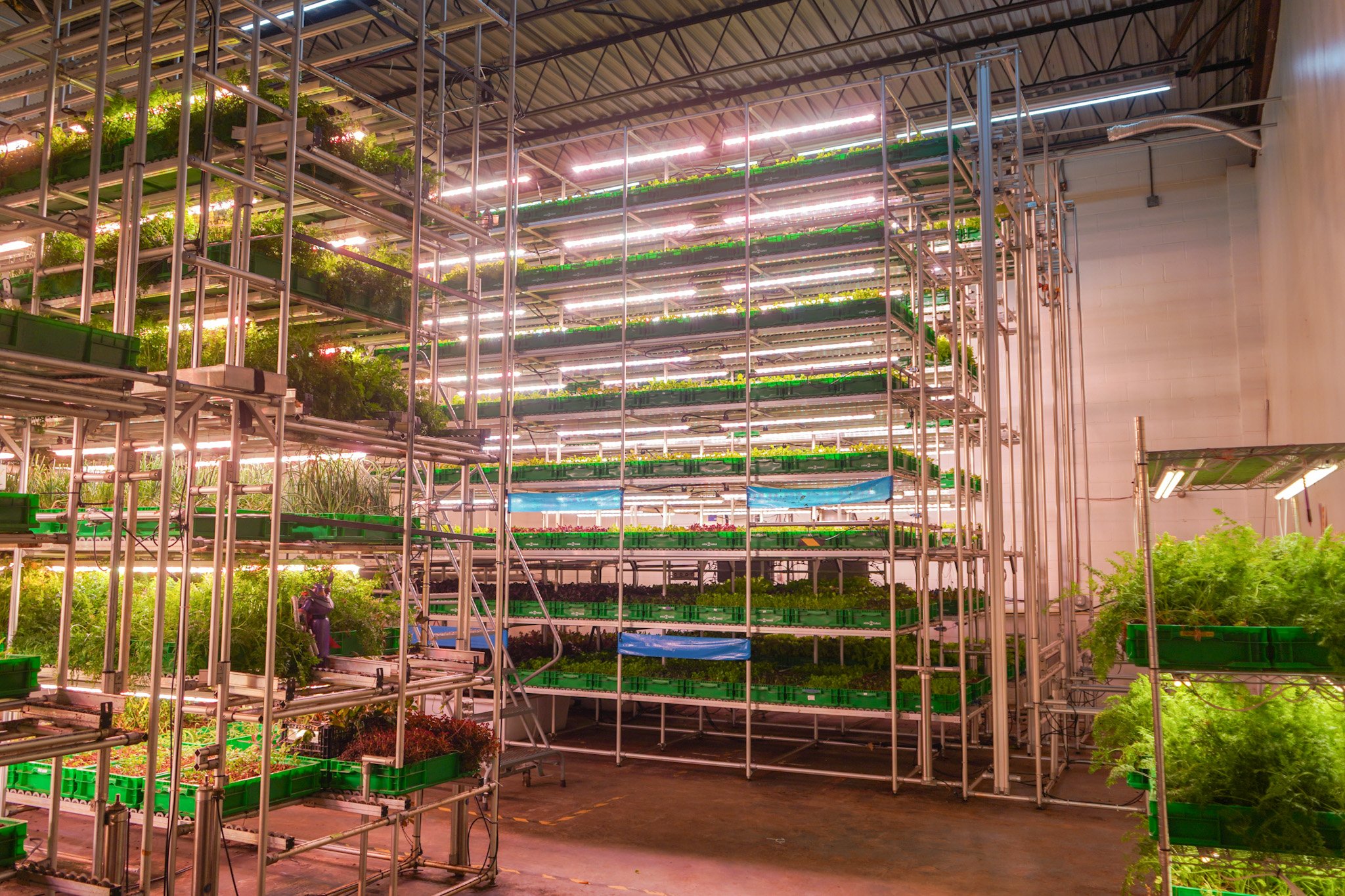
It is a direct repudiation of the scale-and-ship model. Our farms sit within ten miles of our customers. There is no distributor extracting margin. There is no refrigerated truck idling on I-95. The farm feeds its neighbors, which means the 84 percent that evaporates in a conventional supply chain stays, instead, in the hands of the farmer, and the local economy.
The arithmetic changes completely under these conditions. When your supply chain is ten miles instead of fifteen hundred, a few dollars a day in electricity becomes one of the smallest line items in your operation, not an existential threat to your margins.
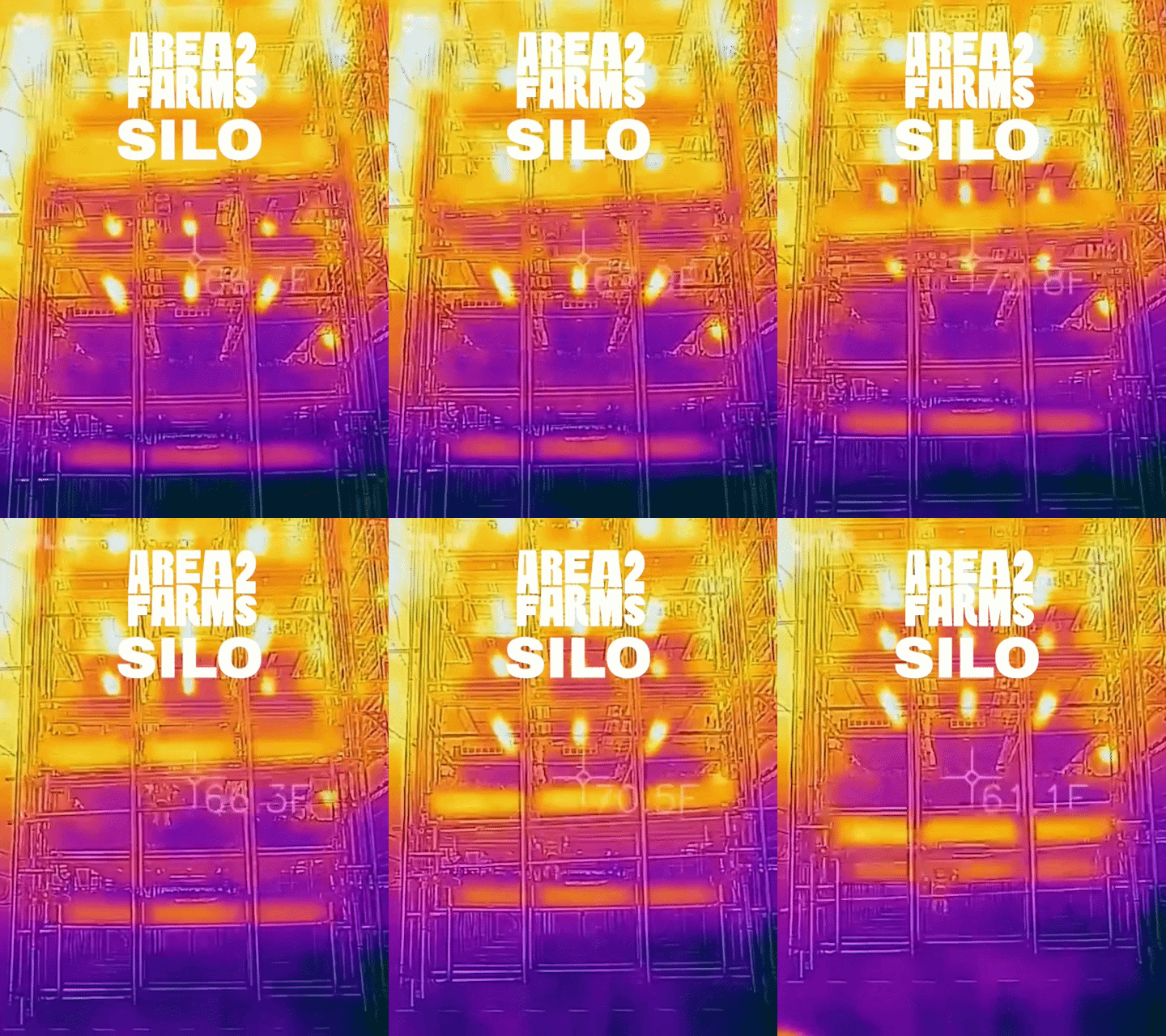
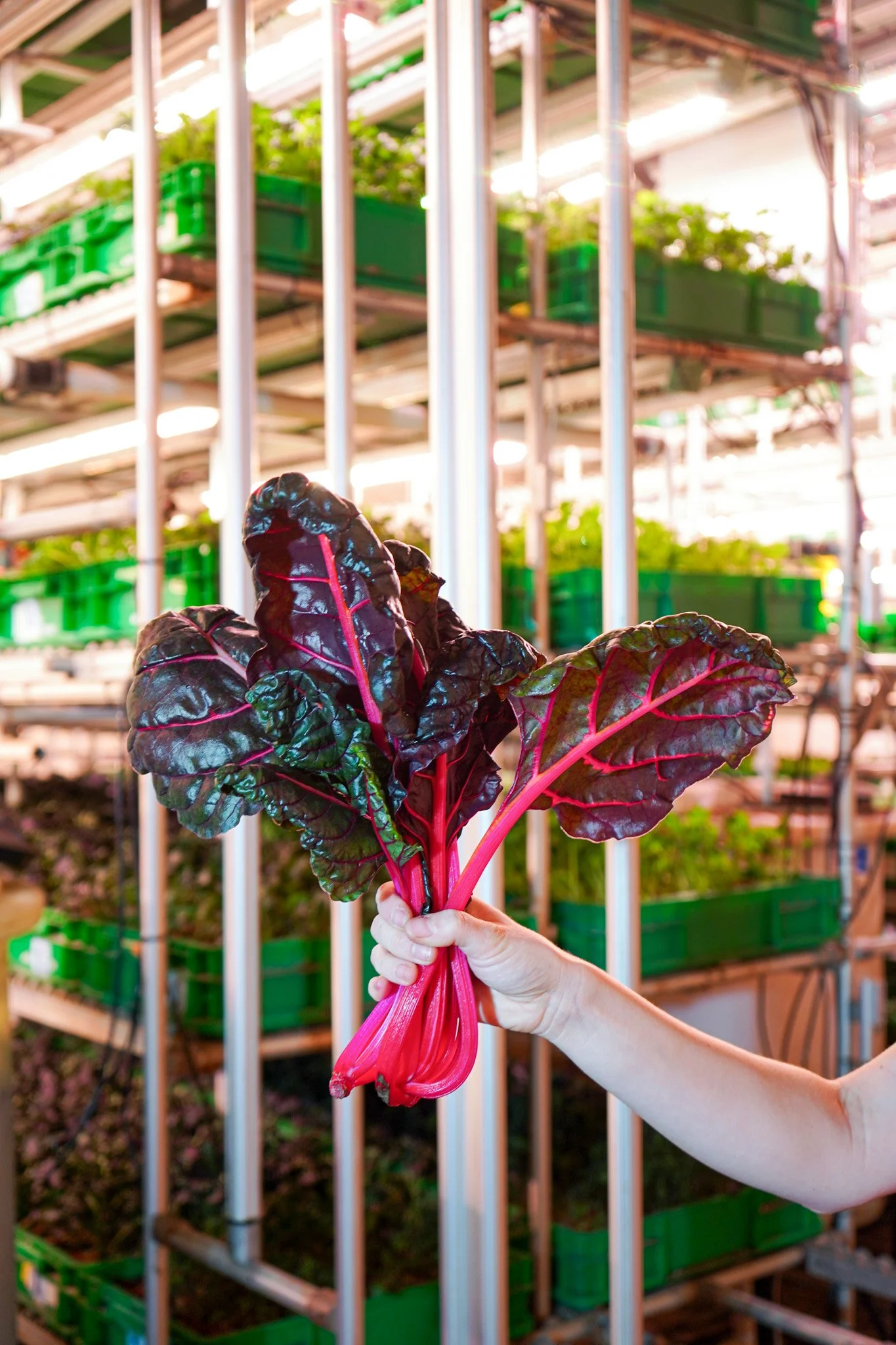
Area 2 Farms has also attacked the energy problem at the hardware level. Our patented Silo growing system cycles crops through day and night rhythms rather than blasting them with continuous light in a fixed space. The approach exploits physics and the natural heat rise and basic thermodynamics to eliminate expensive HVAC systems that drain power at conventional plant factories. In sum Silo reduces LED usage by roughly 25 percent and cuts HVAC costs to nearly zero. The result is equivalent or better yields at a fraction of the capital and operating cost.
None of this is magic. It's just a different set of design choices. Choices that begin with the community rather than the commodity.
The critics are performing an important service. The industry's first wave produced spectacular failures, misallocated capital, and left behind cautionary tales that should inform everything that comes next. But the autopsy should be accurate. The first-generation plant factories didn't die because indoor growing is physically impossible. They died because they were trying to do the wrong thing at the wrong scale in the wrong places.
The question worth asking isn't whether LEDs can compete with sunlight. It's whether a farm ten miles from your door, one that keeps more money with the farmer, shortens the food chain to its practical minimum, and delivers produce hours after harvest, can compete with a tomato that spent two weeks on a truck from Mexico.
On that question, the physics are entirely cooperative
Frequently Asked Questions
-
You own and operate a neighborhood farm as critical infrastructure. You're not just "buying a franchise".
You own the farm. You own the customer relationships. Area 2 Farms provides the competitive advantages: organic certification systems, operational technology, brand, and a network of expert peer farmers solving the same problems you are.
-
No, but you need operational fluency. The best Farmers come from backgrounds where execution was the job.
If you've managed a P&L or led a team, we can train the ag-specific knowledge. If you haven't, this will be harder than you think.
-
The economics work because the farm is the distribution. You're not competing on price; you're competing on proximity and quality.
Direct-to-consumer only. No wholesale. No middlemen. 100% of revenue stays between you and your customers.Land-as-infrastructure. Farms move to consumers, not the other way around. This solves the "last mile" problem that kills most food businesses.
-
Total Investment Range: $308,471 - $471,000
This covers your franchise agreement, site development, equipment, organic certification, and working capital for the first 3 months.
The exact investment depends on site characteristics and local market conditions. We provide a detailed breakdown during your discovery call after we've evaluated your specific geography and goals.
-
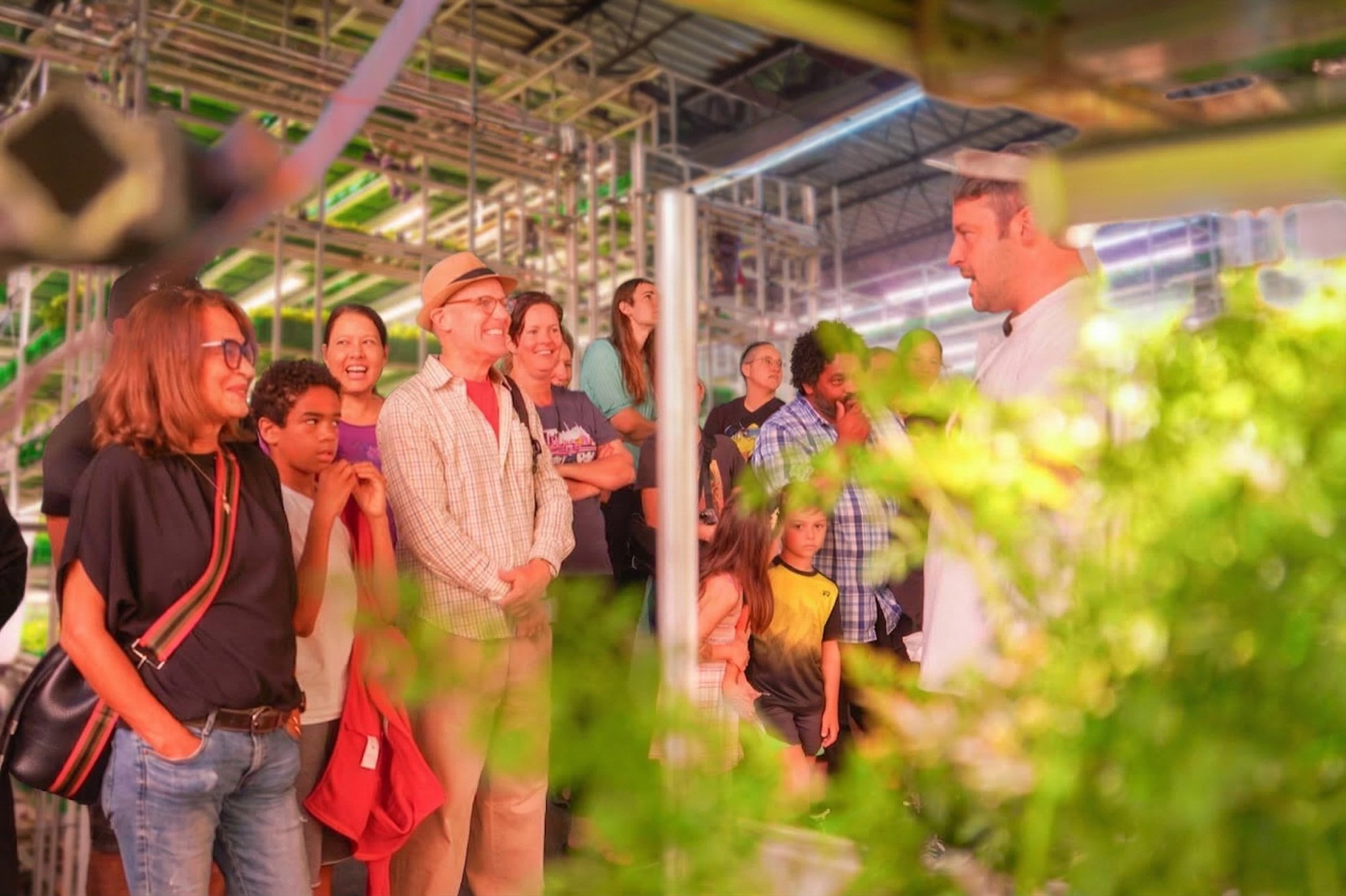
Yes. We insist on it. You need to see the infrastructure, taste the product, and meet the team. This is an essential part of our selection process.