

Building the CSA Table
Local Business is NOT a Zero-Sum Game.
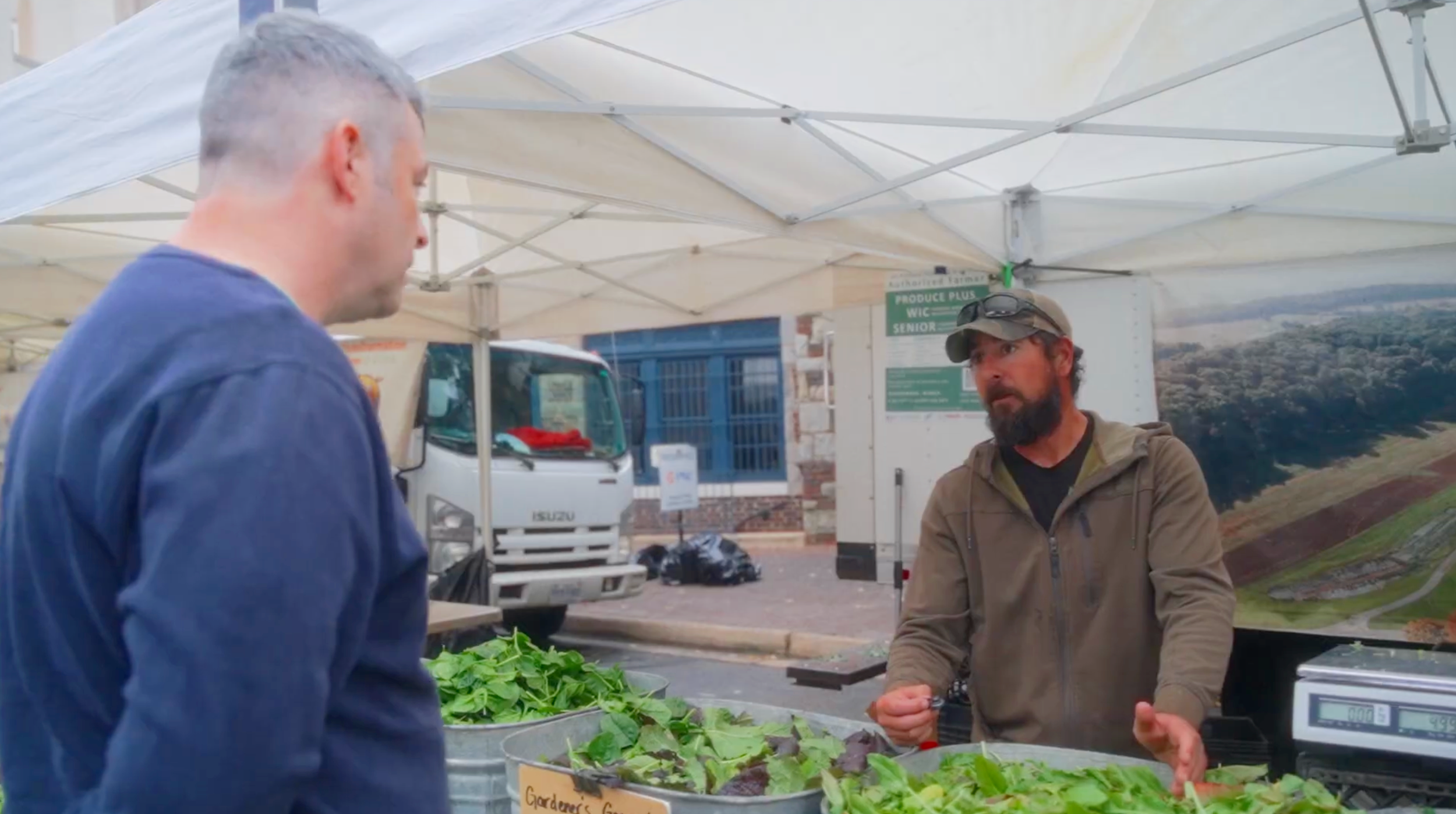
While traditional business psychology teaches us to fear saturation, the local food market grows stronger as more farms join the ecosystem. By shifting the focus from competing with neighbors to displacing the industrial supply chain, more farms expand the availability, visibility, and normalcy of fresh, nutrient-dense food.
Why More Farms Mean a Bigger Table
Many entrepreneurs see competitors as a warning sign. If there are already three bakeries on a block, conventional wisdom says a fourth probably shouldn’t open because the market is saturated and the pie is already divided. Competition however should be viewed as market validation, as long as there is a differentiation to offer. Farms are no different. The biggest threat to local farming isn’t too many farms; it’s too few. When we see a thriving community of Community Supported Agriculture (CSA) programs, we don’t see competitors. We see the early stages of a movement where more farms don't shrink the opportunity for local food but expand it.
More farms benefit every participant in the local economy because the true competition is the fragile global supply chain, not the farmer down the road.
A Signal That the Community Is Ready
When we look at new communities for an Area 2 Farms location, one of the most encouraging signals we can find is an existing CSA culture. It tells us that the community members value relationships with farmers, understand the value of local produce, and that the hard work of education has already begun. They value transparency, freshness, and knowing where their food comes from. For us, what may look like competition is actually what economist Michael Porter calls a "cluster effect": geographic concentrations of linked producers that collectively increase productivity, attract talent, and expand market awareness faster than any single farm could alone. This is driven by a powerful social dynamic: when one neighbor joins a CSA, adjacent neighbors are statistically more likely to follow. This collective momentum explains why the Census of Agriculture reports more than 116,000 farms selling directly to consumers, generating $3.3B in sales for a market that barely existed a generation ago.
In Arlington and the greater Washington D.C. area, where our first farm is located, we are fortunate to be part of a robust ecosystem of more than 60 active CSA programs. These dedicated partners have spent years rebuilding the connection between people and the farmers. Far from being a "saturated" market, this density of local options creates a green light for us to deploy more farms in neighborhoods, ensuring that the local food habit becomes a permanent community infrastructure rather than a seasonal niche.
The Real Size of the Pie
The local food market is often framed as a fixed pie, with the assumption that farms must compete for the same limited number of members. But the real pie is the total amount of food consumed in the region, and currently, the local slice is vanishingly small. According to 2024 USDA ERS data, direct farm sales account for $17.5B of a staggering $2.58 trillion total U.S. food market.
In other words, local food is capturing less than 1% of the total food economy. That isn’t a sign of market saturation; it’s a massive greenfield opportunity.
Right now, the overwhelming majority of our food still travels 1,500 miles before it reaches a plate because of a global supply chain designed for scale rather than health. Our goal isn’t to pull customers away from neighboring farms. Our goal is to provide the infrastructure that gives people a reason to stop buying from that industrial system. When more farms operate in a community, local food becomes more visible and more accessible, expanding the market for everyone and moving the needle on that 1%.
Filling the Gaps
The supply chain disruptions of 2020–2023, coupled with a 24% spike in grocery prices, exposed a brutal reality: our current food system is terrifyingly fragile. CSAs are vital entry points, to truly "expand the pie," when they start acting like critical infrastructure. This infrastructure is the engine for modern consumer demands - including food-as-medicine behaviors and clean ingredient sourcing, that are funneling shoppers toward direct farm models. With produce remaining the #1 organic category at 33% of total sales, the demand for fresh, local greens and vegetables is at an all-time high and growing.
An Area 2 Farms location isn't just a farm; we are a year-round solution to the structural failures that push people back to big-box supermarkets:
The "Winter Gap" Failure: Most local programs go dormant exactly when the global supply chain is most stressed. We don't. Our 51 week harvest ensures the local food habit never has to break.
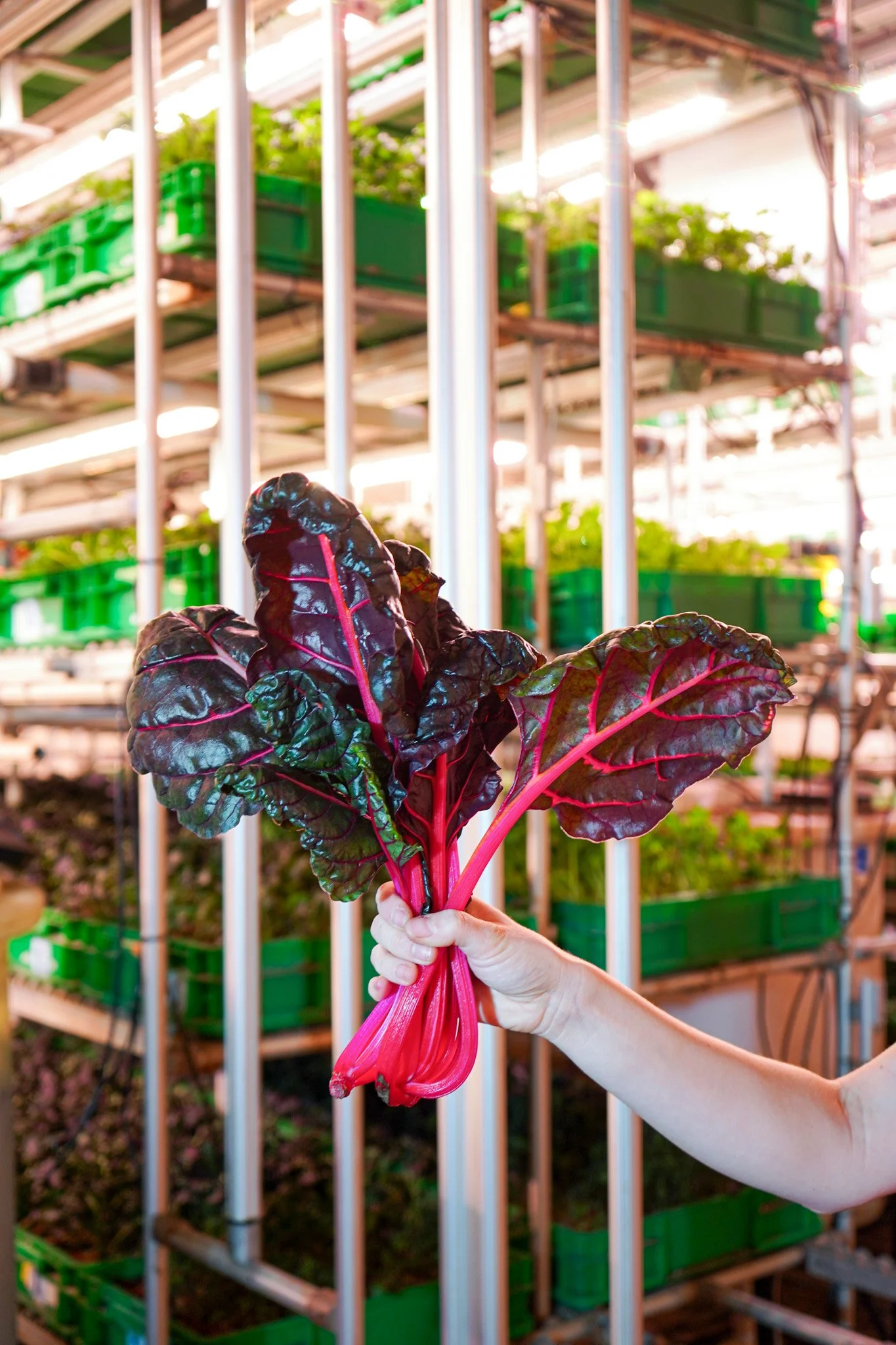
The Consistency Crisis: Climate-dependent farming is inherently unpredictable. By moving production indoors and within ten miles of your front door, we provide a level of harvest certainty that traditional models simply cannot match.
Infrastructure, Not Just an Option: We provide the permanent, high-tech foundation for greens, vegetables, and herbs that allows a community to thrive regardless of frost, drought, or global shipping delays.
We aren't here to be a nice-to-have seasonal box. We are building the hard infrastructure required to make the local food system a permanent, non-negotiable alternative to a broken industrial chain.
A Bigger Table
We love our fellow farmers. We shop from them, we learn from them, and we cheer for their success because strong food communities are built by many hands working together. The competition isn’t the farm down the road. It’s the produce that comes from a farm-to-barrel-to-truck-to-depot-to-train-to-warehouse-to-truck-to-market-to-table distributors before reaching the table. Every new farmer strengthens the system and shortens the distance between the harvest and the home. The goal isn’t to divide the pie but to make the table bigger.
Frequently Asked Questions
-
You own and operate a neighborhood farm as critical infrastructure. You're not just "buying a franchise".
You own the farm. You own the customer relationships. Area 2 Farms provides the competitive advantages: organic certification systems, operational technology, brand, and a network of expert peer farmers solving the same problems you are.
-
No, but you need operational fluency. The best Farmers come from backgrounds where execution was the job.
If you've managed a P&L or led a team, we can train the ag-specific knowledge. If you haven't, this will be harder than you think.
-
The economics work because the farm is the distribution. You're not competing on price; you're competing on proximity and quality.
Direct-to-consumer only. No wholesale. No middlemen. 100% of revenue stays between you and your customers.Land-as-infrastructure. Farms move to consumers, not the other way around. This solves the "last mile" problem that kills most food businesses.
-
Total Investment Range: $308,471 - $471,000
This covers your franchise agreement, site development, equipment, organic certification, and working capital for the first 3 months.
The exact investment depends on site characteristics and local market conditions. We provide a detailed breakdown during your discovery call after we've evaluated your specific geography and goals.
-
Yes. We insist on it. You need to see the infrastructure, taste the product, and meet the team. This is an essential part of our selection process.